Showing posts with label international law. Show all posts

Saturday, April 09, 2016

Copyright Litigation By The Numbers: Over One Million Views & Strong International Audience

 Some time in late 2015, the Copyright Litigation Blog broke the one million page view barrier as tracked by Google Analytics.   Today the number is 1,113,489.  If you google "copyright litigation" Copyright Litigation Blog is the top result and has been for many years.

Where in the world do the viewers of Copyright Litigation Blog come from?   Here are some statistics from the top ten countries on overall readership from the time that Google started counting.   The blog originally had a subscription to Sitemeter that tracked readership, but that broke down at one point. Since Google Analytics started keeping count for free, I chose to rely on the Google Analytics numbers.

United States

615491
France

84993
Russia

71944
Germany

43374
Ukraine

42136
United Kingdom

21335
Canada

13534
China

6163
Poland

5229
Netherlands

 
5088
 
 
Thus, almost half of Copyright Litigation Blog's readers come from outside the United States.

How do these historical numbers compare with more recent viewership?   Last month Google Analytics tracked 13,300 page views (a relatively slow month).   Here are how the numbers broke out by the top ten countries:

United States

6356
Germany

1956
France

1076
Sweden

578
Ukraine

283
Denmark

251
Russia

250
United Kingdom

204
Japan

167
Romania

150
Again we have roughly half of Copyright Litigation Blog's readers coming from outside the U.S. with some fluctuation among the countries represented.

If you would like to receive an email (for free!) each time there is a post on the Copyright Litigation Blog, simply visit Copyright Litigation Blog and enter your email in the "subscribe" box on the right hand side.  The emphasis is on how the Federal Rules of Civil Procedure interact with the Copyright Act and how to solve practical procedural problems encountered in litigation.  I also cover some issues related to litigation involving fine art and stolen art.

If you are an attorney needing to handle a copyright litigation issue for a client, you may consider purchasing Copyright Litigation Handbook (Thomson Reuters West 2015-2016) or accessing Copyright Litigation Handbook on Westlaw or through a Pro-View eBook here.


www.dunnington.com
 Copyright law, fine art and navigating the courts. Attorney and AuthorCopyright Litigation Handbook (Thomson Reuters Westlaw 2015-2016) by Raymond J. Dowd
 Copyright Litigation Handbook on Westlaw

Sunday, February 28, 2016

Copyright Infringement Online: New Report on Pleading Prima Facie Copyright Claims Under The Charming Betsy Doctrine

COPYRIGHT LAW - COPYRIGHT INFRINGEMENT - INTERNATIONAL LAW -PLEADING COPYRIGHT INFRINGEMENT - MAKING AVAILABLE RIGHT - PEER-TO-PEER FILESHARING - INTELLECTUAL PROPERTY - CHARMING BETSY DOCTRINE - MUSIC DOWNLOADS - WIPO COPYRIGHT TREATY
 
"Charming Betsy" Canon 
National statute must be construed so as not to conflict with international law. See Murray v. The Charming Betsy, 6 U.S. (2 Cranch) 64 (1804): "It has also been observed that an act of Congress ought never to be construed to violate the law of nations if any other possible construction remains..."  https://en.wikipedia.org/wiki/Statutory_interpretation


I checked my copy of Reading Law: The Interpretation of Legal Texts by the late Justice Antonin Scalia and Brian Garner and found no reference to this case or this canon.

More on the Charming Betsy doctrine from the Constitutional Law Reporter (quoted below) here:

          As Chief Justice Marshall explained: “An act of Congress ought never to be construed to      violate the law of nations if any other possible construction remains, and consequently can never be construed to violate neutral rights or to affect neutral commerce further than is warranted by the law of nations as understood in this country.”


On February 22, 2016 Register of Copyrights Maria Pallante and the U.S. Copyright Office issued a report (embedded in this post below) to the House Committee on the Judiciary titled:  The Making Available Right in the United States.  The Report is very important reading for copyright litigators because it deals with basic questions of how much a copyright owner needs to investigate and prove in order to go into federal court and file a copyright infringement complaint.  Because the Report purports to provide guidance to resolve differences among federal district  courts, the Report is of tremendous practical import for litigators at the initial stages of a case.

The key question is:  If I represent a copyright owner, can I go to court and successfully plead a copyright infringement claim by showing that a defendant has made my client's copyrighted work available online without authorization, but with no evidence that the copyrighted work was actually downloaded or copied?

Jumping to the punchline, the Copyright Office says "yes."  As an administrative agency to which deference is owed, the Report is likely to be helpful fodder for a the plaintiff acting on shaky evidence.

Restating the practical issues:

1. what do I have to plead to establish a prima facie case of copyright infringement where a defendant has facilitated access to copyrighted works online?

2. what evidence do I need to support a claim for online copyright infringement against a motion to dismiss?

The Report was issued in response to a December 2013 letter from Rep. Melvin L. Watt, Ranking Member, Subcommittee on Courts, Intellectual Property & The Internet.   Rep. Watt had the following three main questions for the Copyright Office:

1. how the existing bundle of rights under Title 17 covers the making available right in the context of digital on-demand transmissions such as peer-to-peer networks, streaming services, and music downloads, as well as more broadly in the digital environment;
2. how foreign laws have interpreted and implemented the relevant provisions of the WIPO Internet Treaties; and
3. the feasibility and necessity of amending U.S. law to strengthen or clarify our law in this area.  Report at 4.

The Report concludes the following:

  • 17 U.S.C. 106 already gives a right of action for "making available"
  • U.S. law should be read to not require evidence that a copy has been disseminated or received as a condition for an infringement claim
  • Offers of access to a copyrighted work implicate a copyright owners distribution right under 17 U.S.C. 106(3) and the U.S. courts ruling otherwise have gotten the law wrong
  • Internet streaming or online display of an image are rights granted to copyright owners and thus covered by 17 U.S.C. 106 (4-6) - public performance and display.  17 U.S.C. 106(1) covers rights of digital reproduction.
  • Changes to the U.S. Copyright Act "would likely prove more disruptive, not less, to the rule of law in this area.
The Report is a fascinating read, particularly since it involves an academic debate between Professor Menell and Nimmer, where Professor Nimmer was persuaded to change his copyright law treatise by the strength of Menell's arguments.  Nimmer had previously insisted that the Copyright Act required actual copies to be transmitted to have a claim for copyright infringement. but Menell persuaded him that the Copyright Act dictated otherwise.  Now that Nimmer's treatise is in line with the Copyright Office's thinking, the Report concludes that judges who relied on Nimmer's prior incorrect thinking will get things right.

The reason that this is important in the international law context is that the U.S. signed WIPO Internet Treaties (WIPO Copyright Treaty and WIPO Performance and Phonogram Treaty) prior to enacting the Digital Millenium Copyright Act of 1998 ("DMCA").  The argument is that in 1998 Congress thought that Title 17 already protected the "making available" right required by the WIPO Treaties.

The Copyright Office argues that a contrary reading would violate the  Charming Betsy doctrine.

The Report is thoughtful, but it is not without its critics.  Check out Techdirt's detailed post:  Copyright Office Decides To Rewrite Copyright Law Itself, Blesses A 'Making Available' Right That Isn't There.

Chapter 3 of my book Copyright Litigation Handbook is titled Client Interviews and Initial Investigations.  Chapter 7 is titled Drafting The Infringement Complaint.  Where it is financially and factually feasible to collect evidence of an actual download before commencing an action, it would appear prudent to do so, rather than relying on uncertain legal precedent, unclear statutory language, and the charm of the Charming Betsy doctrine.

The Report contains many instances of other countries working the "making available" right into their copyright legislation.  If having an effective "making available" right is so important to compliance with the WIPO Treaties, clarifying the Copyright Act might be the job of Congress, rather than the courts.


www.dunnington.com
 Copyright law, fine art and navigating the courts. All practice, no theory.Copyright Litigation Handbook (Thomson Reuters Westlaw 2015-2016) by Raymond J. Dowd
 Copyright Litigation Handbook on Westlaw

Friday, February 14, 2014

Join SDNY Chief Judge Preska In Celebrating The Rule of Law February 25


February 25, 2014: SDNY Rule of Law Awards Event

by admin on January 28, 2014
The Southern District of New York Chapter and the Federal Litigation Section are honored to present the:

Rule of Law Award

to two German attorneys, Alexander von Stohl, Sr. and Bruno Jost, for their inspiring professional conduct and perseverance during the historic trial of what came to be known as the Mykonos case, which came on the heels of the gruesome and high-profile assassination of four Iranian opposition leaders in Berlin.
The awards event will explore the Mykonos case’s implications for relations with Iran today and feature speakers:
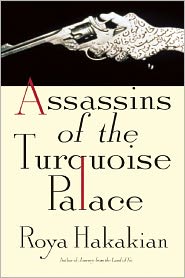
  • Roya Hakakian, author of the acclaimed non-fiction book documenting the case, Assassins of the Turquoise Palace
  • assassinscoverJ.D. Bindenagel, former U.S. Ambassador and Director of Central European Affairs for Germany, Austria and Switzerland
  • U.S. District Judge Joanna Seybert of the E.D.N.Y (moderator)
  • Chief U.S. District Judge Loretta A. Preska of the S.D.N.Y (opening remarks)
February 25, 2014, 5:30 p.m. – 8:00 p.m.
Daniel P. Moynihan U.S. Courthouse, 500 Pearl Street, New York, New York 10007
Please see the flyer www.fedbar.org for more information
Admission is free but space is limited!
To secure seating, please RSVP promptly to Erin Rodgers, Federal Bar Association: (517) 481-9118 or erodgers@fedbar.org 


www.dunnington.com
 Copyright law, fine art and navigating the courts. All practice, no theory.Copyright Litigation Handbook (Thomson Reuters Westlaw 2012-2013) by Raymond J. Dowd
 Copyright Litigation Handbook on Westlaw

Tuesday, October 22, 2013

Join Me This Weekend: International Law Weekend NYC Panel on Careers in International Art Law


Careers in International Art Law Panel

When:  Saturday, October 26th at 3:30 p.m.-5:00 p.m.

Where: Fordham Law School, first floor, Manhattan, NYC.


Like many human activities, the art world is becoming increasingly international. Works of art regularly travel across borders in connection with exhibitions. These works also travel across borders in connection with theft, looting, and trafficking. Today, art is sold and distributed via the Internet and other transnational media in ways not imagined just decades ago. These phenomena and others have created the need for lawyers specialized in forms of licensing, contracting, and dispute resolution particular to the art world. The panel will explore career paths for lawyers interested in wedding a legal career to their passion for the arts -- careers in private law firms, in museums, in government, and in international bodies.

Moderator:
• Professor Paul R. Dubinsky, Director of Graduate Studies, Wayne State University Law School

Panelists:
• Lee Crawford Boyd, Partner, Schwarcz, Rimberg, Boyd & Rader
• Raymond J. Dowd, Partner, Dunnington, Bartholow & Miller LLP
• Charles Goldstein, Counsel, Herrick, Feinstein, LLP


Click here to learn more about the event!

Click here for a full schedule!

www.dunnington.com
 Copyright law, fine art and navigating the courts. All practice, no theory.Copyright Litigation Handbook (Thomson Reuters Westlaw 2012-2013) by Raymond J. Dowd
 Copyright Litigation Handbook on Westlaw

Thursday, March 07, 2013

Should Stolen Holocaust Art be Returned? Legal and Policy Perspectives and Recent Case Developments

Should Stolen Holocaust Art be Returned? Legal and Policy Perspectives and Recent Case Developments

Thursday, March 21, 2013 from 6:00 PM to 9:00 PM.
2nd floor auditorium

Join us for a very special program discussing the hot button issues of whether stolen Holocaust art should be returned. Learn about recent cases and understand the legal and policy perspectives, including a presentation by Ambassador Douglas Davidson, Special Envoy for Holocaust Issues, U.S. State Department.
AGENDA
  • Introduction and Overview of the Issues
  • A View from the U.S. State Department
  • From Abraham Lincoln's Code of War to the Morgenthau Seizure at MOMA: The American Victory in World War II, Recent Case Law and the Failure to Return Stolen Art to Holocaust Victms
  • Nazi Looted Art Commissions After 1998 Washington Conference: Comparing the European and American Experiences
  • Cassirer v. Kingdom of Spain:An Update

Faculty:
Program Chair and Faculty: Raymond Dowd, Dunnington, Bartholow & Miller LLP

Faculty: Hon. Stephen Crane (Ret.), JAMS; Ambassador Douglas Davidson, Special Envoy for Holocaust Issues; Victor Kovner, Davis,Wright Tremaine LLP; David Rowland, Esq.,  Rowland & Petroff LLP, Sharon Cohen-Levin, A.U.S.A., Southern District of New York


Member Price:  $125
Non-Member Attorney Price: $175


Click here to register online! Or click here to download registration form!


Click here for more information!


 www.dunnington.com
 Copyright law, fine art and navigating the courts. All practice, no theory.
Copyright Litigation Handbook (Thomson Reuters Westlaw 2012-2013) by Raymond J. Dowd  Copyright Litigation Handbook on Westlaw

Wednesday, March 02, 2011

IP Law Professors: Obama Secret Anticounterfeiting Treaty Unconstitutional Without Congressional Approval


Still the best explanation out there of how a bill moves through Congress to become a law, although it omits the role of lobbyists and corporations in initiating laws. But lots of law professors think that the Obama Administration's forgotten the Schoolhouse Rock video many of us grew up with.

Thirty law professors think that the Anti-Counterfeiting Trade Agreement ought to work the same way - by going through Congress and that ACTA is unconstitutional because it purports to be and will be a binding treaty internationally under the doctrine of pacta sunt servanda (agreements must be kept), but without Congressional approval, is not enforceable domestically and thus requires Congressional approval.   But according to the 30 professors, other countries will be able to punish US noncompliance with countermeasures consistent with international law.   The professors point out that even the most radical exponents of unilateral Presidential action don't believe that the President can act unilaterally where powers are specifically reserved to Congress by Article 1, Section 8 of the US Constitution.

The professors urge that if President Obama signs ACTA, he should reserve the right of Congress to approve it before it becomes binding.  This, according to the professors, would protect us under international law in the case of non-implementation.

More on ACTA and the Obama Administration's IP Czar here.

The EFF's take on why you should care here.

International IP and the Public Interest call for IP law professors to sign on here.
Final text of ACTA via the United States Trade Representative here.

Article I, Section 8 of the U.S. Constitution gives Congress the power to regulate IP.

U.S. Constitution - Article 1 Section 8

Article 1 - The Legislative Branch
Section 8 - Powers of Congress

The Congress shall have Power To lay and collect Taxes, Duties, Imposts and Excises, to pay the Debts and provide for the common Defence and general Welfare of the United States; but all Duties, Imposts and Excises shall be uniform throughout the United States;

To borrow money on the credit of the United States;

To regulate Commerce with foreign Nations, and among the several States, and with the Indian Tribes;

To establish an uniform Rule of Naturalization, and uniform Laws on the subject of Bankruptcies throughout the United States;

To coin Money, regulate the Value thereof, and of foreign Coin, and fix the Standard of Weights and Measures;

To provide for the Punishment of counterfeiting the Securities and current Coin of the United States;

To establish Post Offices and Post Roads;

To promote the Progress of Science and useful Arts, by securing for limited Times to Authors and Inventors the exclusive Right to their respective Writings and Discoveries;

To constitute Tribunals inferior to the supreme Court;

To define and punish Piracies and Felonies committed on the high Seas, and Offenses against the Law of Nations;

To declare War, grant Letters of Marque and Reprisal, and make Rules concerning Captures on Land and Water;

To raise and support Armies, but no Appropriation of Money to that Use shall be for a longer Term than two Years;

To provide and maintain a Navy;

To make Rules for the Government and Regulation of the land and naval Forces;

To provide for calling forth the Militia to execute the Laws of the Union, suppress Insurrections and repel Invasions;

To provide for organizing, arming, and disciplining, the Militia, and for governing such Part of them as may be employed in the Service of the United States, reserving to the States respectively, the Appointment of the Officers, and the Authority of training the Militia according to the discipline prescribed by Congress;

To exercise exclusive Legislation in all Cases whatsoever, over such District (not exceeding ten Miles square) as may, by Cession of particular States, and the acceptance of Congress, become the Seat of the Government of the United States, and to exercise like Authority over all Places purchased by the Consent of the Legislature of the State in which the Same shall be, for the Erection of Forts, Magazines, Arsenals, dock-Yards, and other needful Buildings; And

To make all Laws which shall be necessary and proper for carrying into Execution the foregoing Powers, and all other Powers vested by this Constitution in the Government of the United States, or in any Department or Officer thereof.


The 30 professors opposing ACTA below, their position paper here.

Sean M. Flynn
(Counsel of Record)
American University Washington College of Law
4801 Massachusetts Ave NW
Washington D.C. 20016

Brook Baker Northeastern School of Law

Dan L. Burk University of California, Irvine School of Law

Brian W. Carver University of California, Berkeley School of Information

Anthony Falzone Stanford Law School

Eric Fink Elon University School of Law

Michael Geist University of Ottawa School of Law

Llewellyn Joseph Gibbons University of Toledo School of Law

Leah Chan Grinvald Saint Louis University School of Law

Amy Kapczynski University of California, Berkeley School of Law

Dennis S. Karjala Arizona State University College of Law

Julian Kinderlerer University of Cape Town Department of Private Law

Lawrence Lessig Harvard Law School

David Levine Elon University School of Law

Jamie Lund St. Mary‟s University School of Law

Michael J. Madison University of Pittsburgh School of Law

Dr. Jeremy Malcolm Consumers International

Mark P. McKenna University of Notre Dame Law School

Michael Morris University of Edinburgh School of Law

Ira Nathenson St. Thomas University School of Law

Kevin Outterson Boston University School of Law

Frank Pasquale Seton Hall Law School

Varun Piplani George Washington University

Kenneth L. Port William Mitchell College of Law

Srividhya Ragavan University of Oklahoma College of Law

Wendy Seltzer Princeton Center for Information Technology Policy

Jessica Silbey Suffolk University Law School

Christopher Sprigman University of Virginia School of Law

Yousuf A. Vawda University of KwaZulu Natal Faculty of Law

Peter K. Yu Drake University Law School


 Purchase Copyright Litigation Handbook 2010 by Raymond J. Dowd from West here  

Tuesday, February 08, 2011

2010 U.S. INTELLECTUAL PROPERTY ENFORCEMENT COORDINATOR ANNUAL REPORT ON INTELLECTUAL PROPERTY ENFORCEMENT

President Obama's IP Czar Victoria Espinel issued her first report on intellectual property enforcement today, find it here

 Purchase Copyright Litigation Handbook 2010 by Raymond J. Dowd from West here  

Monday, June 21, 2010

ACTA Update: Endorse A Petition Opposing ACTA

If you would like to voice your concern about the pending Anti-Counterfeiting Trade Agreement, a petition is going out soon, to view it and sign up, the link is below:

PIJIP: - American University Washington College of Law

My comments on ACTA here  and here.


Purchase Copyright Litigation Handbook from West here

Friday, May 21, 2010

Obama signals support for ACTA Copyright Treaty

Obama signals support for copyright treaty - The Hill's Hillicon Valley

Tuesday, March 23, 2010

International Law: Wrestling the Dead Hand of History - Panel on Nazi Looted Art

Alfred Flechtheim portrait 1910 by Jacob Hilsdorf
Courtesy Wikipedia

Professor Jen Kreder announced on the Intlawgrrls blog her panel this coming Friday March 26 in Washington DC at the American Society of International Law.

The panel, called "Wrestling the Dead Hand of History: Perspectives on a Proposed State Department Commission on Nazi Looted Art," and features Jen Kreder with Ambassadors Kennedy and Eizenstat, Dr. Lucille A. Roussin (left) of Cardozo School of Law, and New York-based attorney Charles A. Goldstein.

I support the US State Department's proposal to set up a U.S. Commission to return artworks in US museums that were stolen from Jews and never returned.

If the US doesn't take this measure and force our museums to start telling the truth about where the art in their collections come from, we can hardly expect other countries such as Russia, Poland and Austria to return all of the arts stolen from Jews by the Nazis.

I will be attending the panel. Jen is launching a special interest group of the American Society of International Law  on the International Law of Cultural Heritage & the Arts.

Above at top is a photograph of Alfred Flechtheim, the leading contemporary art dealer in the Weimar Republic and reviled in Nazi propaganda as the "Artjew Flechtheim".   You will find practically nothing written about Flechtheim in the English language - the U.S. museums who have the artworks stolen from his Berlin and Dusseldorf galleries would like to write Flechtheim out of history.  Below, Flechtheim's portrait by Otto Dix.  Dix's style shown below was known as "Neue Sachtlicheit" (New Objectivity).

Alfred Flechtheim the Art Dealer - Otto Dix 1926